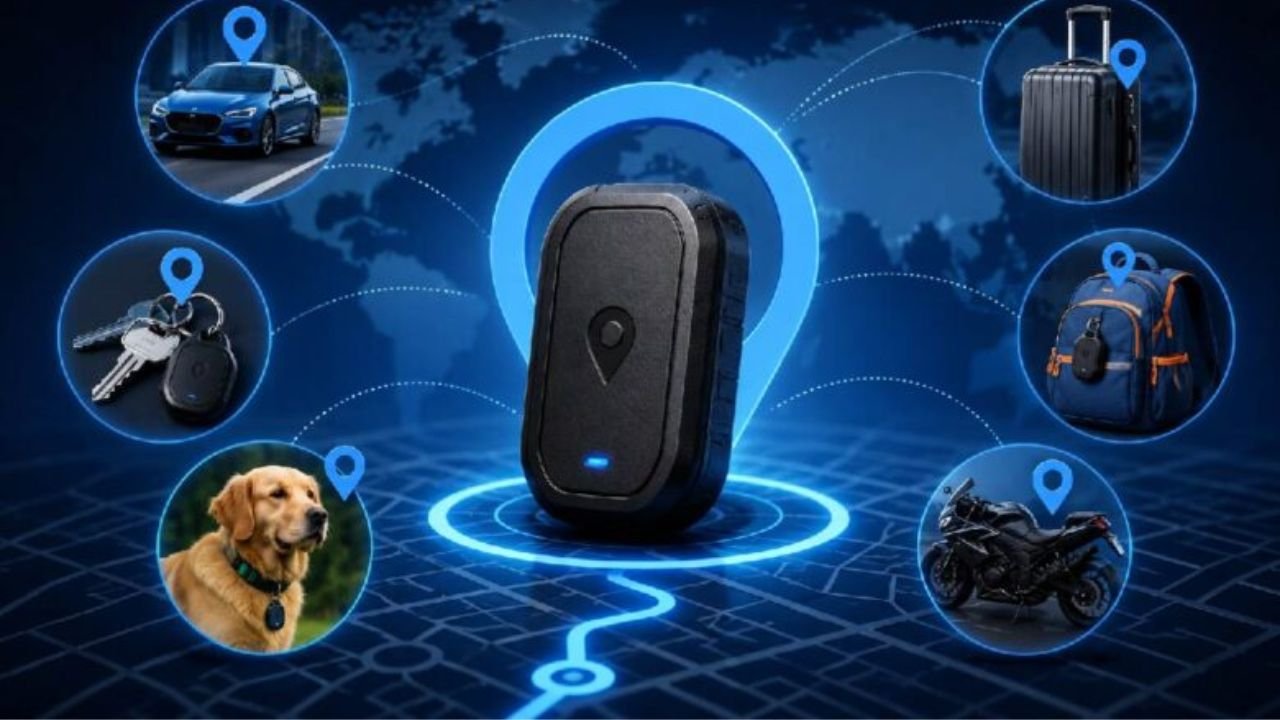
A commuter is halfway to the station when a familiar worry appears: where are the keys? A traveller reaches the baggage carousel, but the suitcase never arrives. A business owner finishes the day and wonders whether an expensive tool has been left at a client’s property. Such moments explain why tracking technology has moved into everyday life.
The word tracqueur is increasingly used online as a broad label for a device, app or system that follows the location, movement or activity of something. It may refer to a GPS unit, Bluetooth tag, fitness wearable, asset platform or website tool.
That broad meaning is useful, but it can also create confusion. Not every tracker works in the same way, and not every system offers live updates. Some work only nearby, some depend on mobile coverage, and others collect behavioural rather than geographical data. Understanding the term begins with the word itself.
What Does Tracqueur Actually Mean?
“Tracqueur” is not a widely established English technical term, nor is it the usual French word for a digital tracking device. In English, “tracker” is the familiar general term. In French, “traceur GPS” is commonly used for a GPS tracking device, while “traqueur” has traditional dictionary meanings linked with pursuing or driving game during a hunt.
Online usage has developed differently. Some publishers and product descriptions use tracqueur as a modern-sounding variation of tracker. In that informal sense, it describes something that records position, movement, status or behaviour.
Context matters more than the label. One product may locate keys through Bluetooth; another may use GPS and a SIM card to show a vehicle in an app. A business platform may follow parcels or equipment, while a website tool may track clicks without showing a physical location.
Readers should therefore ask what the system measures, how it communicates and who can access the data. That reveals differences in range, accuracy, cost and privacy.
How Modern Tracking Systems Work
Most tracking systems follow a simple chain: they collect a signal or event, transmit the data, process it and display a useful result.
GPS-based devices calculate position using signals from navigation satellites. Many vehicle, pet and personal-safety trackers use a mobile network, so they may require a SIM, data plan or subscription. The location is then shown through an app or dashboard.
Bluetooth trackers work differently. They are designed mainly for shorter-range item finding and communicate with nearby phones or compatible devices. Some use a wider network of participating devices to report an item’s approximate location. This makes them useful for keys, wallets and luggage, although performance depends on the surrounding network.
Other systems use Wi-Fi, RFID, barcodes or ultra-wideband technology. Warehouses may scan tags as stock passes through set points. Hospitals can use asset tags to help staff find equipment.
A complete tracqueur system may include sensors, a battery, connectivity, cloud storage, an app and alert settings. Geofencing creates a virtual boundary and sends a notification when a device crosses it. Location history shows past movement, while motion alerts warn when an object is disturbed.
Accuracy is never absolute. Tall buildings, tunnels, dense walls, weak mobile coverage and battery-saving settings can affect results. A map pin should be treated as an estimate rather than unquestionable proof of an exact position.
Where Tracking Technology Appears in Everyday Life
The most familiar use is item recovery. A person may attach a tag to keys or place one inside a backpack. Instead of searching every room, the person can make the tag sound or view its last known location. The benefit is less time lost to a common problem.
Travellers use similar devices in luggage. A tracker cannot force an airline to return a delayed suitcase, but it may show whether the bag remained at the departure airport, reached the destination or moved elsewhere. That information can make a service-desk conversation more focused.
Vehicle tracking is more advanced. Private owners may use a GPS unit as an added security measure, while businesses use telematics to see where company vehicles are, review routes, plan jobs and monitor deliveries. Couriers may use updates for arrival windows, while construction firms may track machinery between sites.
Pet trackers are another category. A collar-mounted device can help locate an animal that escapes from a garden or disappears during a walk. Waterproofing, attachment strength, battery life and rural coverage still matter.
In workplaces, tracking can cover assets and processes rather than people. RFID tags may identify equipment as it moves between rooms, barcode scans can update a parcel’s status, and environmental sensors can record temperature or humidity in storage areas. Fitness bands and smartwatches also track movement, sleep and heart-rate information, although their readings should not automatically be treated as medical diagnoses.
Digital tracking belongs in the same conversation. Websites and apps may record page views, clicks, session lengths, device identifiers or advertising interactions. This still creates a trail of behaviour.
Benefits, Limitations and UK Privacy Questions
Tracking technology is popular because it turns uncertainty into information. Someone can find a misplaced object, a fleet manager can respond to a delayed vehicle, and a warehouse team can identify where valuable equipment was last recorded.
For businesses, the strongest benefit is visibility. Better information can support route planning, stock control, customer updates, maintenance schedules and theft prevention. It can reveal patterns that would otherwise remain hidden.
There are practical limitations. Live GPS updates use more battery than occasional reporting. Mobile-connected devices may stop transmitting in weak-signal areas. Bluetooth tags are not independent GPS trackers. Subscriptions can also increase long-term cost.
Privacy is the larger concern. In the UK, location data and online identifiers can count as personal data when they relate to an identified or identifiable person. Organisations handling that information may need to follow the UK GDPR and the Data Protection Act 2018, including principles of fairness, transparency, purpose limitation, data minimisation and security.
Workplace monitoring requires particular care. An employer should be able to justify monitoring and normally make workers aware that it is happening and why. A tracker fitted to a company vehicle may serve a legitimate operational purpose, but collecting more information than necessary or quietly following private journeys creates additional risk.
Personal use also demands judgement. Tracking property owned by the user is very different from secretly tracking another adult. Parents and carers may have genuine safety reasons for using location tools, but age, capacity, consent, proportionality and security still matter.
How to Choose and Use a Tracker Responsibly
The right choice begins with one question: what problem is the device expected to solve? A Bluetooth tag may be ideal for keys but unsuitable for a vehicle travelling across the country. A GPS tracker may offer wider coverage but require charging and subscriptions.
Range and connectivity should be checked carefully. Buyers should determine whether the product uses Bluetooth, GPS, mobile data, Wi-Fi or a crowdsourced finding network. “Real-time” can mean different update intervals, so the refresh rate is worth checking.
Battery life should be considered under realistic settings. A device advertised to last several weeks may achieve that figure only with infrequent updates. Waterproofing and attachment quality matter for outdoor use.
The app matters almost as much as the hardware. Clear maps, useful alerts, account security and simple privacy controls make a system easier to trust. Buyers should also check the full cost, including activation charges, replacement batteries and monthly or annual plans.
Responsible use means telling relevant people what is being tracked and limiting access to those who need it. Accounts should use strong, unique passwords and multi-factor authentication where available. Permissions should be reviewed and devices updated.
A tracqueur is most valuable when it answers a clear question without collecting unnecessary information. The right system fits its intended purpose, works reliably and treats personal data with care.
Frequently Asked Questions About Tracqueur
Is tracqueur another word for tracker?
In online technology content, it is often used that way. However, it is not the standard English term, and its spelling should not be confused with established French words. Product specifications are more reliable than the label alone.
Does every tracking device use GPS?
No. Small item finders commonly use Bluetooth, while warehouses may use RFID or barcodes. Some systems combine several technologies to improve range or precision.
Can a tracker work without the internet?
A device may calculate or record information without an internet connection, but remote viewing usually requires a way to transmit the data. Bluetooth tags may report through nearby compatible devices, while many GPS units use mobile networks.
Is it legal to track a vehicle in the UK?
Tracking a person’s own vehicle is different from monitoring someone else. Business and employee tracking can involve personal data and workplace rights, so purpose, transparency and data handling matter. Complex cases may require professional advice.
What features are most useful?
The answer depends on the purpose, but buyers often value dependable coverage, realistic battery life, movement alerts, geofencing, location history, a secure app and clear subscription terms.
Conclusion
Tracking technology has become part of ordinary life because it can reduce uncertainty around possessions, vehicles, pets, deliveries and business assets. Yet the name on the product is less important than the way the system works. By checking its technology, coverage, costs, accuracy and privacy controls, a reader can separate a useful tool from an attractive promise. Used transparently and for a defined purpose, tracqueur technology can provide practical reassurance without turning convenience into unnecessary surveillance.