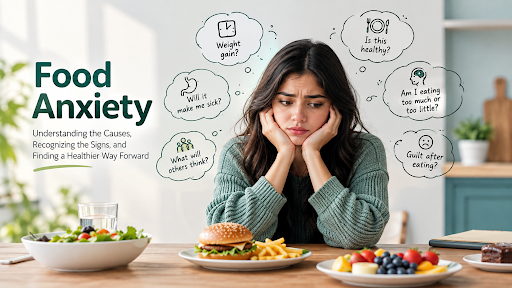
Food anxiety sneaks up on you. One minute you’re fine. Then a friend says, “Let’s grab lunch,” and your stomach drops.
Ever cancelled plans just because food was involved? You’re far from alone. The sweaty palms at a restaurant table are more common than people admit. It’s exhausting, and most folks hide it well. This guide covers why it happens, what it looks like, and what actually helps. We’ll also talk about when to bring in a professional.
What Is Food Anxiety?
Think of it as fear that attaches itself to eating. For some people, the trigger is one specific food. For others, it’s a crowded table or a fear of choking. Some just dread feeling sick afterward.
It isn’t always an eating disorder, though. The two do overlap quite a bit. About two in three people with an eating disorder also deal with an anxiety disorder at some point. That number surprised me, honestly. It’s a good reason to take mealtime dread seriously instead of brushing it off.
What Causes Food Anxiety?
Nobody has one neat answer here. Usually a few things pile up over time. These come up most often:
- Family history. Anxiety tends to run in families, and eating worries can too.
- Brain chemistry. Serotonin affects both mood and appetite, so it plays a part.
- Perfectionism. If you live by strict food rules, one slip can feel like a disaster.
- A bad experience. A scary choking moment or a nasty bout of food poisoning can stick for years.
- Rough patches. Stress from work, loss, or big changes turns up the volume on everything.
None of this means you did something wrong. Brains just learn fear quickly.
A friend of mine, Sana, got sick from a street snack two summers ago. She recovered within days. Her fear didn’t. Soon she was skipping family dinners, and then she noticed how small her world had become. Naming the fear was the first thing that loosened it.
Signs and Symptoms of Food Anxiety
The signs show up in three places: your body, your thoughts, and what you actually do. Here’s a rough picture:
Where It Shows UpWhat You Might NoticeBodyPounding heart, queasy stomach, shaky hands, a tight throatThoughts”What if I choke?” “What if this makes me sick?” Replaying the meal afterwardBehaviorSkipping meals, choosing restaurants weeks ahead, checking labels over and over, eating alone
Some signs are easy to miss. Carrying your own snacks everywhere can look like good planning. Yet it might be a safety habit.
“I’m not scared of the food. I’m scared of how I’ll feel ten minutes after I eat it.”
Something many people say in one form or another.
None of this means you’re weak. Your brain’s alarm is just set too sensitively.
Food Anxiety vs. Eating Disorders
From the outside, they can look alike. But they aren’t the same thing. Anxiety is mostly about fear. Eating disorders often bring in body image, a need for control, and harmful habits like severe restriction or purging.
You can have both, too. And a fear of vomiting, known as emetophobia, can look like an eating disorder when it isn’t one. That’s why a proper assessment matters. Googling your symptoms at 2 a.m. won’t settle it. A doctor or therapist can.
Handling Parties and Social Events
Weddings, office lunches, birthday dinners. Food sits at the center, and it feels like everyone’s watching your plate. Then someone says “Come on, just try a bite!” and the pressure doubles.
“Everyone else seems relaxed. I’m just counting the minutes until I can leave.”
A feeling many guests hide well.
A few small tricks can help. Look at the menu online first. Eat something plain and familiar before you go. Bring a friend who knows what’s up. And it’s okay to step outside for five minutes. You could even agree on a code word with that friend. It’s a tiny thing, but it works better than you’d expect.
Simple Ways to Cope With Food Anxiety
You can’t just decide to stop worrying. I wish it worked that way. But small habits do add up. Try a few of these:
- Slow breathing. Breathe in for four counts, then out for six.
- Regular meals. A steady routine keeps your body from panicking on an empty stomach.
- Tiny exposure. Pick one scary food a week and try a small portion.
- Grounding. Name five things you can see. It pulls you back into the room.
- Kinder words. Drop the “good food” and “bad food” labels.
- A wins list. Write down what went okay, however small.
Say pasta at a friend’s place feels risky. Start by looking at the menu. Next time, try one bite at the table. The time after that, order a small plate. Slow beats heroic.
I’ll be honest, I got this wrong at first. I figured willpower would do it. Actually, scratch that. Small steps beat forcing yourself every time.
Treatment Options for Food Anxiety
The encouraging news is that treatment works. Most people do best with therapy plus some kind of support. Here’s a quick rundown:
OptionHow It HelpsCognitive behavioral therapy (CBT)Teaches you to catch scary thoughts and rethink themExposure therapyBuilds comfort with feared foods in small, safe stepsFamily supportBrings loved ones in, especially for kids and teensDietitian guidanceHelps you eat in a balanced way without fear or strict rulesMedicationMay ease anxiety symptoms, but only a doctor can prescribe itSupport groupsPuts you in a room with people who truly get it
Exposure therapy is actually a form of CBT. Experts rate it highly for fears around eating. Medication is a separate call, and only a doctor should make it.
When to Seek Help
Reach out when the worry starts costing you something. Maybe it’s your health, your mood, or your friendships. Other red flags are skipping meals often, losing weight without meaning to, or dodging people because of food. Food anxiety tends to improve faster with early help. Start with your doctor or a therapist who knows eating concerns. If you ever feel unsafe, call your local emergency number right away.
“Asking for help isn’t weakness. It’s how feeling safe around food starts.”
Worth remembering on a hard day.
Doctors in the UAE are warning diabetics to pull over immediately if they experience.
Conclusion
Food anxiety can feel huge, but it doesn’t have to run your days. You now know what drives it, how it shows up, and what helps. Pick one small thing today. Maybe it’s a slow breath before dinner. Maybe it’s booking that appointment you’ve been putting off. Either way, meals can feel calm again.
FAQs
- What is food anxiety?
It’s a strong worry or fear around eating. It might center on what you eat, how much, or who’s watching. - Is it an eating disorder?
Not always. They overlap, though, so a professional should help you sort out which one you’re dealing with. - What triggers it?
Stress, a past scare like choking or food poisoning, rigid food rules, and social pressure are common ones. - Will it go away by itself?
Mild worry sometimes fades. Fear that lingers usually needs support, so don’t wait it out for months. - Does therapy help?
Yes, for many people. CBT and exposure therapy make meals feel less threatening over time. - When should I see a doctor?
Go when worry affects your sleep, health, mood, or daily routine. Also go if you’re skipping meals a lot.
