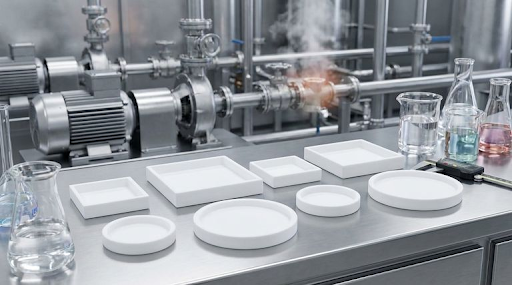
Industrial machinery operates under extreme conditions—high temperatures, heavy loads, corrosive chemicals, and continuous motion. In such environments, the materials used inside machines can determine whether production runs smoothly or constantly stops for maintenance. This is where PTFE (Polytetrafluoroethylene) steps in as a high-performance engineering material widely used in modern manufacturing. Known for its durability and stability, PTFE has become a go-to choice for industries that demand reliability and efficiency.
At its core, PTFE is a fluoropolymer with extraordinary resistance to heat, chemicals, and friction. It maintains structural integrity across extreme temperatures ranging roughly from –260°C to 260°C, making it suitable for demanding industrial environments. Machines operating in chemical plants, pharmaceutical factories, and food processing facilities often use PTFE components because they can withstand aggressive substances and constant wear without degrading.
Manufacturers increasingly rely on custom PTFE components rather than generic parts. Customization allows engineers to design machine parts that fit perfectly into specific mechanical systems, improving efficiency and reducing operational issues. Companies like ptfefelis specialize in producing tailored PTFE solutions that match exact technical requirements, whether for sealing, sliding, or insulating applications.
When you look at industrial machinery from a performance perspective, efficiency is often about minimizing friction, reducing maintenance, and ensuring reliable operation over long periods. PTFE delivers all of these benefits. Its unique molecular structure creates an extremely smooth surface that prevents materials from sticking or building up on equipment, allowing machines to operate consistently with minimal interruption.
Core Properties That Make PTFE Unique
If industrial materials had a “superpower ranking,” PTFE would sit near the top. Engineers appreciate it not just for one property, but for a combination of several remarkable characteristics. These properties work together to make PTFE an ideal material for demanding machinery components.
One of the most important features is PTFE’s extremely low coefficient of friction, which is among the lowest of any solid material. Imagine sliding a heavy object across ice instead of rough concrete—that’s the difference PTFE can make in mechanical systems. When components such as bearings, sliders, or gears use PTFE, the reduced friction decreases wear and allows smoother movement inside machinery.
Another key property is chemical resistance. PTFE is nearly inert, meaning it does not react with most chemicals, acids, or solvents. In industries like chemical manufacturing or petrochemicals, this resistance prevents equipment corrosion and contamination. Components made from PTFE remain stable even when exposed to aggressive substances that would quickly destroy ordinary materials.
Thermal stability is another powerful advantage. PTFE can withstand extreme temperatures without losing its performance characteristics. Whether machinery operates in freezing environments or high-heat production processes, PTFE maintains reliability. This ability significantly reduces the need for frequent component replacements.
Add to that excellent electrical insulation properties, non-stick surfaces, and resistance to weather and UV exposure, and it becomes clear why PTFE is sometimes referred to as the “king of engineering plastics.” When manufacturers create custom PTFE parts through specialized providers like ptfefelis, they unlock the full potential of these properties for highly efficient industrial machinery.
Why Custom PTFE Components Are Essential for Modern Machinery
The Shift from Standard Parts to Custom Solutions
Industrial engineering has evolved dramatically over the past few decades. In the past, manufacturers often relied on standard off-the-shelf components that were designed to fit a wide range of machines. While these generic parts worked reasonably well, they rarely delivered optimal performance. Today, industries demand higher efficiency, lower energy consumption, and longer equipment lifespans—goals that standard components simply cannot always achieve.
Custom components solve this problem by tailoring each part to the precise needs of a machine. Instead of adapting machinery to fit a standard component, engineers now design components that perfectly match the machine’s operating conditions. Custom PTFE components exemplify this approach. By adjusting shapes, dimensions, fillers, and material grades, manufacturers can create PTFE parts that perform exactly as required.
Consider a pump operating in a chemical processing plant. A standard gasket might work initially, but over time it may degrade under exposure to corrosive chemicals and fluctuating temperatures. A custom PTFE gasket, however, can be engineered to handle these exact conditions, ensuring longer service life and fewer breakdowns.
This shift toward customization also reflects the increasing complexity of industrial systems. Modern machinery often operates at higher speeds, higher pressures, and tighter tolerances. Custom PTFE parts allow engineers to optimize performance for these demanding environments. Companies like ptfefelis specialize in producing precisely engineered components designed to improve machine efficiency and reliability.
The Engineering Advantage of Custom PTFE Designs
Custom PTFE components do more than simply replace standard parts—they enhance the overall design of machinery. When engineers have the freedom to tailor materials and shapes, they can eliminate inefficiencies that would otherwise limit machine performance.
For instance, custom PTFE bearings can be designed to distribute load evenly across moving surfaces, reducing stress on mechanical parts. Similarly, PTFE seals can be engineered with precise compression properties to prevent leaks while minimizing friction. These improvements may seem small individually, but together they dramatically improve overall machine efficiency.
Another advantage lies in material customization. PTFE can be modified with fillers such as glass fiber, carbon, or bronze to enhance properties like wear resistance and strength. Engineers can select the exact PTFE composition that best suits the machine’s operating environment.
The result is machinery that operates more smoothly, requires less maintenance, and lasts longer. In highly competitive industries where downtime can cost thousands of dollars per hour, these advantages make custom PTFE solutions incredibly valuable.
Key Properties of PTFE That Improve Industrial Efficiency
Ultra-Low Friction for Smooth Mechanical Movement
Friction is the hidden enemy of industrial efficiency. Every moving machine component—from gears to bearings—faces resistance that generates heat, wastes energy, and causes wear over time. PTFE addresses this challenge with one of the lowest friction coefficients among solid materials, allowing mechanical systems to operate more smoothly.
When PTFE components are used in machinery, the reduction in friction directly improves operational efficiency. Motors require less power to drive moving parts, which translates into lower energy consumption. In large industrial systems running around the clock, this energy reduction can lead to significant cost savings.
Low friction also minimizes wear on both the PTFE component and the surrounding parts. Machines maintain consistent performance for longer periods, reducing the frequency of maintenance shutdowns. This is especially valuable in high-speed equipment where friction could otherwise cause rapid component degradation.
Chemical Resistance for Harsh Environments
Industrial machines often operate in environments filled with aggressive chemicals, acids, or solvents. Traditional materials can corrode quickly under these conditions, leading to leaks, contamination, and equipment failure. PTFE’s exceptional chemical resistance makes it an ideal material for such environments.
Because PTFE is chemically inert, it does not react with most substances used in industrial processes. Components such as seals, linings, and gaskets remain stable even when exposed to corrosive chemicals. This property protects machinery and ensures safe operation.
High Temperature Stability and Durability
Heat is another challenge in industrial systems. Many machines operate at temperatures that would cause ordinary plastics or metals to degrade. PTFE’s thermal stability allows it to perform reliably across extremely wide temperature ranges.
This stability ensures that PTFE components maintain their shape, strength, and performance even during prolonged exposure to high heat. As a result, machinery experiences fewer failures caused by thermal stress.
Electrical Insulation for Sensitive Equipment
Modern machinery often includes sensors, electronics, and control systems that must be protected from electrical interference. PTFE provides excellent dielectric strength, making it a reliable electrical insulator.
Insulation components made from PTFE help prevent electrical failures and protect sensitive instrumentation in industrial environments. This reliability contributes to continuous production and safer machine operation.
Types of Custom PTFE Components Used in Machinery
PTFE Bearings and Bushings
PTFE bearings and bushings are widely used in machinery where smooth motion is essential. Their low friction properties reduce resistance between moving parts, allowing machines to operate efficiently without excessive lubrication. In many cases, PTFE bearings are self-lubricating, eliminating the need for additional oils or greases.
PTFE Seals and Gaskets
Seals and gaskets made from PTFE play a critical role in preventing leaks in pipelines, pumps, and valves. Because PTFE resists chemical corrosion, these components are commonly used in chemical processing systems where other materials would fail.
PTFE Wear Pads and Sliding Plates
Wear pads and sliding plates made from PTFE protect machine surfaces from friction damage. They allow heavy components to slide smoothly across each other while minimizing wear.
PTFE Insulation Components
In electrical systems, PTFE insulation protects wires, connectors, and sensors from environmental damage. Its dielectric properties make it ideal for applications requiring reliable electrical isolation.
How Custom PTFE Components Boost Machine Performance
Reduced Energy Consumption
One of the biggest advantages of PTFE components is their ability to reduce energy loss in mechanical systems. Lower friction means motors require less power to drive moving parts. Over time, this efficiency translates into substantial energy savings.
Lower Maintenance and Downtime
PTFE’s durability and resistance to wear significantly reduce maintenance requirements. Machines equipped with PTFE components experience fewer breakdowns and require fewer replacement parts.
Extended Equipment Lifespan
Because PTFE minimizes friction, corrosion, and thermal damage, machinery components last longer. This extended lifespan reduces operational costs and improves overall productivity.
Industrial Applications of Custom PTFE Components
Chemical Processing Industry
In chemical plants, PTFE components protect machinery from aggressive substances while maintaining efficient operation.
Food and Pharmaceutical Manufacturing
Because PTFE is non-toxic and chemically inert, it is commonly used in food and pharmaceutical production equipment.
Automotive and Aerospace Engineering
High-performance vehicles and aircraft use PTFE components to reduce friction, improve reliability, and enhance fuel efficiency.
Why Companies Choose ptfefelis for Custom PTFE Solutions
Selecting the right manufacturer for custom PTFE components is just as important as choosing the material itself. Companies rely on ptfefelis because it combines engineering expertise with advanced manufacturing technologies to produce high-precision PTFE parts.
ptfefelis focuses on delivering customized solutions tailored to each client’s machinery and operational environment. By collaborating closely with engineers and manufacturers, the company ensures that every PTFE component meets exact performance requirements.
The result is machinery that runs more efficiently, requires less maintenance, and delivers consistent performance in even the most demanding industrial conditions.
Conclusion
Industrial machinery efficiency depends heavily on the materials used within its components. Custom PTFE components offer a powerful combination of low friction, chemical resistance, thermal stability, and durability. These properties enable machines to operate smoothly, reduce maintenance costs, and maintain high productivity levels.
By choosing specialized manufacturers like ptfefelis, companies can unlock the full potential of PTFE technology. Custom-designed components ensure that machinery performs at its best, even in the most demanding industrial environments.
FAQs
1. What industries benefit most from custom PTFE components?
Industries such as chemical processing, pharmaceuticals, food manufacturing, aerospace, and automotive engineering benefit greatly from PTFE components due to their durability and chemical resistance.
2. Why is PTFE ideal for machinery components?
PTFE has extremely low friction, high chemical resistance, and excellent thermal stability, making it ideal for moving parts and harsh industrial environments.
3. Do PTFE components reduce maintenance costs?
Yes. PTFE parts last longer and resist wear, reducing the need for frequent replacements and maintenance shutdowns.
4. Are custom PTFE components better than standard ones?
Custom components are designed specifically for the machine’s requirements, which improves efficiency, reliability, and lifespan.
5. What makes ptfefelis different from other PTFE manufacturers?
ptfefelis focuses on precision engineering and tailored solutions, ensuring that every PTFE component matches the exact needs of industrial machinery.